How to Spot the Need for Basement Waterproofing NJ After a Storm
@cesarqwum442
September 24, 2026 · 13 min read
Storm damage in a New Jersey basement rarely announces itself with a dramatic flood line and ruined furniture. More often, the warning signs start small. A damp corner appears near the foundation wall. Paint begins to bubble. The air feels heavier than usual, even a day or two after the rain has stopped. Homeowners often assume these issues will dry out on their own. Sometimes they do, at least on the surface. The real problem is what remains behind the drywall, under the flooring, or inside the block foundation.
That is where experience matters. After a major storm, a basement can look mostly fine and still be taking on water in ways that lead to mold, wood rot, damaged insulation, and long-term structural wear. In New Jersey, where older homes, high water tables, dense clay soil, and coastal weather patterns all come into play, storm-related basement moisture is common enough that ignoring the early signs can get expensive fast.
If you are trying to decide whether the issue is minor or whether it is time to consider Basement Waterproofing NJ services, the answer usually lies in the details. You do not need to be a contractor to notice them, but you do need to know what to look for.
Why storms expose basement weaknesses
A basement does not have to flood for water intrusion to become serious. Heavy rain changes the pressure around your foundation. When the soil around the house becomes saturated, hydrostatic pressure builds and pushes moisture against basement walls and under the slab. Even a well-built foundation can start leaking if drainage conditions worsen, gutters overflow, or an old crack opens up under stress.
In New Jersey, this can happen after one rough storm or a string of rainy days. Homes in places with older masonry https://sethnpyc763.summitviewdaily.com/posts/how-basement-waterproofing-nj-helps-avoid-expensive-emergency-repairs walls often show seepage differently than homes with poured concrete foundations. Block walls may hold moisture internally and show white mineral deposits on the surface. Poured walls may reveal hairline cracks that were invisible in dry weather. A finished basement can hide both problems until the odor gives it away.
I have seen homeowners focus on the amount of visible water and miss the bigger issue. A quarter inch of water on the floor gets attention right away. A persistent damp smell and a darkened baseboard, not so much. Yet the second case can point to repeated moisture entry that has been going on for months or years.
The first 48 hours tell you a lot
After a storm, timing matters. What you see during the first day or two can help distinguish a one-time incident from a broader waterproofing problem. If the basement dries quickly with normal ventilation and there are no stains, odors, or recurring damp spots, you may be dealing with a minor event. If moisture lingers, spreads, or returns with every storm, it is pointing to a system failure somewhere.
Walk the basement slowly. Do not just look at the middle of the room. Check the wall-floor joint, the corners, the area around utility penetrations, the bottoms of support columns, and any section where the floor has a slight dip. Moisture follows the path of least resistance. That path is rarely obvious at first glance.
A homeowner in central New Jersey once described her basement as "not flooded, just a little clammy." The floor looked dry. What changed the picture was a faint brown line behind stored bins along one wall and a musty odor near a finished section. When the paneling came off, the bottom of the studs had taken on moisture repeatedly. The issue was not dramatic, but it was ongoing, and the longer it stayed hidden, the more expensive the repair became.
Visible signs that often point to waterproofing needs
Some symptoms are hard to miss. Others are easy to dismiss until they worsen. These are the signs that most often suggest a basement needs more than a fan and a dehumidifier after a storm:
- water stains creeping upward from the floor or spreading across a wall
- efflorescence, the white chalky residue left by evaporated moisture
- peeling paint, bubbling wall coatings, or warped trim
- musty odors that persist beyond a day or two of dry weather
- cracks in the wall or floor that look darker, damp, or newly widened
Each of these signs tells a slightly different story. Efflorescence usually means water has moved through masonry and left mineral deposits behind. Peeling paint often means moisture is trapped behind the surface rather than simply condensing in the air. A crack that feels damp after rain deserves attention even if it is narrow. Water does not need much space to enter.
The smell matters too. A basement that smells earthy, stale, or vaguely like wet cardboard often has hidden moisture, even if you cannot find standing water. That odor tends to cling to fabric, holiday decorations, and unfinished wood. Homeowners get used to it more quickly than they realize, which is why guests sometimes notice it first.
When the problem may be outside, not inside
One of the most common mistakes is assuming every wet basement problem starts with the basement itself. In many cases, the source is poor exterior water management. A house can have a perfectly sound foundation and still take on water if roof runoff dumps next to the footing or the yard pitches water toward the structure.
After a storm, step outside and look at the perimeter. If downspouts discharge too close to the house, that alone can create enough saturation to drive water inward. Clogged gutters spill water in concentrated sheets. Mulch beds built up too high can trap moisture against the wall. In some neighborhoods, especially where lots are tight and grading has shifted over the years, water from a neighbor's yard may also be contributing.
This is where judgment comes in. Not every wet basement requires a full interior system. Sometimes extending downspouts, correcting grading, or addressing a failed exterior drain solves the problem. Other times, those fixes help but do not go far enough because the water table or hydrostatic pressure is the real issue. A good assessment looks at both the interior symptoms and the exterior conditions together.
Clues hidden in finished basements
Finished basements make storm damage harder to read. Carpet padding can absorb moisture while the top surface feels only slightly cool. Vinyl plank floors may resist visible staining but allow dampness underneath. Painted drywall can hide subtle swelling at the base for weeks.
Pay attention to changes in texture. If baseboards separate from the wall, if corners feel soft, or if a laminate floor starts to cup near an exterior wall, moisture is likely getting in. You may also notice rust on metal furniture legs or a film of condensation on closed storage bins. Those are indirect clues, but useful ones.
Ceiling stains in a basement are often blamed on plumbing, and sometimes that is correct. After a storm, though, the source can be water entering higher up through the foundation wall and tracking along framing before dripping elsewhere. Water has a talent for making the true entry point hard to identify.
I usually advise homeowners not to trust appearances alone in a finished space. If a storm was severe and there are any signs of recurring dampness, a moisture meter inspection is often worth it. What looks cosmetic may not be.
The difference between condensation and water intrusion
This is one of the biggest gray areas. Basements naturally run cooler than the rest of the house. During humid weather, that can lead to condensation on pipes, ducts, and even concrete surfaces. Not every damp patch means groundwater is entering.
The trick is to notice where the moisture is and how it behaves. Condensation tends to form on cold surfaces and may appear more uniformly during humid days, even without rain. Water intrusion usually follows a pattern tied to storms. It shows up near cracks, wall joints, floor seams, or one recurring section of the perimeter.
A simple test can help. Tape a square of aluminum foil or plastic tightly against a suspicious wall area and leave it for about 24 hours. If moisture forms on the room side, humidity may be the main issue. If moisture develops behind it, water is likely moving through the wall. It is not a perfect diagnostic tool, but it helps narrow the cause.
That distinction matters because the remedy is different. Condensation calls for humidity control, insulation adjustments, and ventilation strategy. Intrusion calls for drainage, sealing, sump work, or a broader Basement Waterproofing NJ approach.
What sump pump performance reveals after a storm
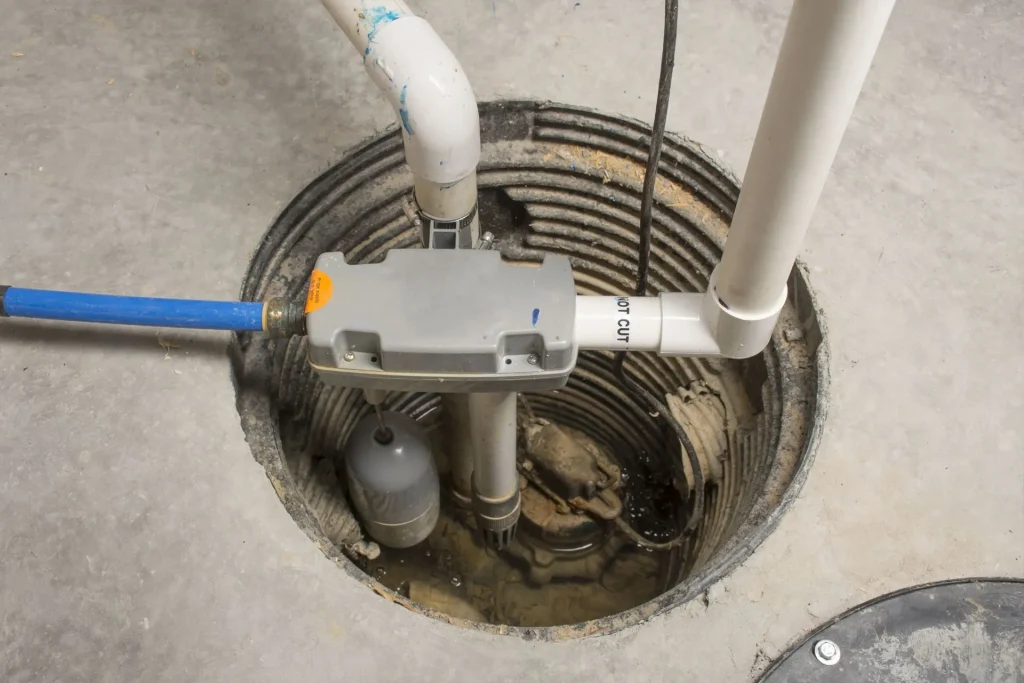
If your basement already has a sump pump, do not assume its mere presence means the waterproofing is adequate. After a heavy storm, the pump's behavior can be very revealing. Running frequently is not necessarily a problem. Running constantly, short cycling, making unusual noises, or failing to keep the pit at a stable level is.
A sump pit that fills rapidly and struggles to keep up suggests significant water pressure beneath the slab. That does not automatically mean failure, but it may mean the system needs maintenance, an upgraded pump, a battery backup, or additional drainage channels. If water still appears on the floor while the sump is operating, the pump may not be the only weak point.
Power outages are another major issue in New Jersey storms. A basement can stay dry for years and then flood during one outage because the primary pump stops at exactly the wrong time. Backup systems are often treated as optional until they are urgently needed. After any storm, test the pump, inspect the discharge line, and make sure it is not clogged or frozen seasonally.
Cracks deserve context, not panic
Many foundations develop small cracks over time. Not every crack means structural danger, and not every crack leaks. What matters is location, width, movement, and moisture activity.
Vertical hairline cracks in poured concrete are common. If they stay dry and stable, they may be more cosmetic than urgent. Horizontal cracks, stair-step cracks in masonry, or any crack that widens noticeably should be evaluated more carefully. A crack that leaks only during storms is still a waterproofing issue even if the structure itself is otherwise sound.
New stains around an old crack are especially important. That change often means outside conditions have shifted, drainage has worsened, or sealing methods used in the past are no longer holding. I have seen basement owners paint over cracks year after year, only to discover that the paint was trapping moisture and making deterioration harder to spot.
What homeowners can safely check on their own
There is value in a careful homeowner inspection, especially right after a storm when evidence is fresh. You do not need specialized equipment to spot patterns, and those observations can help a professional diagnose the problem more accurately later.
- photograph damp areas, stains, and cracks while they are visible
- note whether moisture appears during rain, after rain, or even in dry periods
- inspect gutters, downspouts, and discharge points outside
- check stored cardboard, fabric, and wood for hidden dampness or odor
- test the sump pump and listen for irregular cycling
That record helps answer one of the most important questions in basement diagnostics: was this a single event or part of a repeating pattern? Homeowners often remember the broad story but forget the details, and the details are what drive the right repair plan.
What you should not do is seal over active moisture with generic paint or caulk and assume the issue is solved. Surface coatings have their place, but they are not a substitute for water management. In some cases, they make later diagnosis harder because the visible clues are masked while the moisture remains active underneath.
When to call a professional without delay
Some situations do not warrant wait-and-see. If you have standing water, recurring seepage after multiple storms, visible mold growth, electrical hazards, or signs that framing materials are staying wet, bring in a qualified professional promptly. The same goes for any basement where the odor is strong enough that dehumidification does not noticeably improve it within a day or two.
Homes with finished basements are especially risky to delay because water damage can spread behind walls long before it becomes obvious. Families storing documents, photos, tools, or seasonal clothing downstairs also have more to lose than they may realize. A small leak can damage irreplaceable belongings before it ever reaches the center of the floor.
Professional assessment is also wise if you are planning to sell the home. Buyers and inspectors tend to notice moisture history quickly. A basement that has been properly diagnosed and corrected is far easier to explain than one that smells damp and has fresh paint in suspicious places.
What a real waterproofing solution may involve
There is no single fix that suits every basement. That is why blanket advice tends to disappoint homeowners. Depending on the cause, the right solution may include exterior grading correction, gutter and downspout improvements, crack injection, interior drainage channels, sump pump replacement, vapor barriers, or more comprehensive foundation waterproofing.
The best contractors explain not just what they recommend, but why. If they propose an interior drain system, they should be able to show how water is entering and why exterior-only measures will not be enough. If they suggest a simple crack repair, they should be honest about whether broader drainage issues are absent or just being left unaddressed.
This is where the phrase Basement Waterproofing NJ becomes more than a search term. New Jersey basements have regional patterns, older housing stock in many areas, and weather swings that make local experience useful. A solution that works well in a dry-climate market may not hold up the same way in a state with frequent storms, freeze-thaw cycles, and varied soil conditions.
The cost of waiting is rarely just cosmetic
People tend to delay basement work because the space is "only storage" or because the leak seems occasional. That logic makes sense until materials begin to decay. Moisture can compromise insulation, rust appliances, swell door frames, and feed mold colonies that travel beyond the basement itself. Even if the visible damage seems minor, chronic dampness changes the whole environment of the lower level.
It also chips away at confidence in the house. Homeowners start checking the basement nervously every time rain is in the forecast. They avoid storing valuables there. They postpone finishing projects. Over time, the basement becomes a liability rather than usable square footage.
The better approach is to treat early signs seriously, especially after a storm. You are not overreacting by investigating a musty smell, an unexplained stain, or a recurring damp line along the wall. Those are often the first warnings that a manageable repair today could become a much larger one later.
A storm has a way of stress-testing everything at once, the roof runoff, the grading, the drainage path, the sump system, the foundation wall, and the slab below your feet. If your basement shows you where it is vulnerable, believe it. The signs are usually there before the damage becomes obvious. Spotting them early is the difference between drying out a space and truly protecting it.
ARD Waterproofing
Address: 98 Smull Ave, West Caldwell, NJ 07006
Phone number: +12016465936
FAQ About Basement Waterproofing NJ
What is the best waterproofing method for a basement?
The best overall approach to waterproofing a basement is a combined exterior and interior system that stops water at the foundation wall and safely manages any moisture that gets through.
What is the average cost to waterproof a basement?
The average cost to waterproof a basement ranges from $2,500 to $15,000, with most homeowners paying around $5,200 for a complete project.
Can a basement be waterproofed from the inside?
Yes, a basement can be waterproofed from the inside, and it is often the most affordable and least disruptive method.